

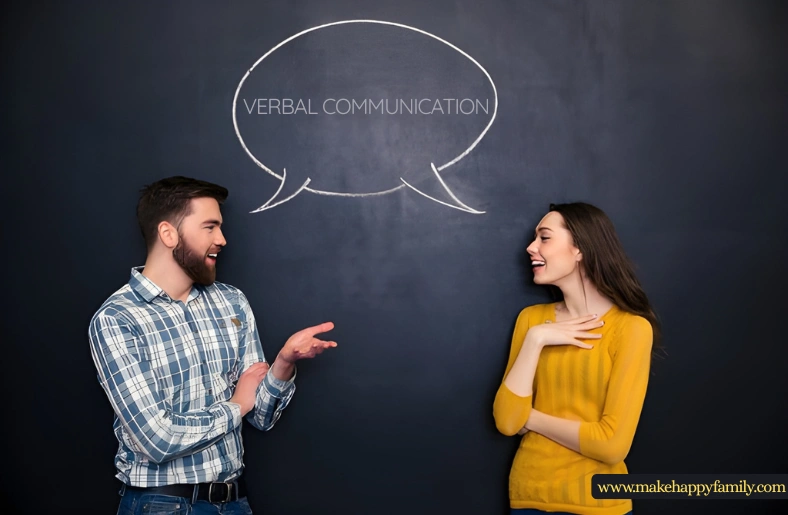
The verbal communication meaning goes far beyond just talking. It’s about how we use words, tone, and timing to express love, resolve conflict, and create emotional safety with the person we’ve chosen to share our life with. In the first few months together, we might naturally speak with more care and warmth. But as life gets busier – jobs, kids, routines – our words can become rushed, reactive, or even hurtful without us realizing it.
Here, you’ll discover what verbal communication really means in the context of marriage and relationships, why it’s the foundation of lasting connection, and practical ways to strengthen how you and your partner talk to each other every day.
Last updated: October 28, 2025
What Is Verbal Communication in Relationships?
Verbal communication is the use of spoken or written words to convey thoughts, emotions, needs, and intentions between people. In relationships, it’s not just about what you say — it’s about how, when, and why you say it.
When we talk about communication meaning in relationships, we’re really talking about the exchange of understanding. Words become the bridge between two inner worlds. They help us share joy, navigate differences, and reassure each other during tough times.
But here’s where it gets tricky: the same sentence can land completely differently depending on your tone, body language, and emotional state. “I’m fine” can mean you’re genuinely okay, or it can signal you’re shutting down. That’s why understanding the layers of verbal communication is so important for partners who want to stay connected.
Disclaimer: This post is for informational purposes only and does not replace professional therapy or counseling. For personalized relationship support, please consult a licensed therapist or counselor.
Communication Across Languages: A Quick Reference
For couples from diverse linguistic backgrounds, understanding how communication is expressed in different languages can bridge cultural gaps and deepen connection:
| Term | Language | Meaning |
|---|---|---|
| Communication meaning in Hindi | Hindi | संचार या संवाद (Sanchar ya Samvad) – the exchange of information, thoughts, and feelings |
| Communication meaning in Telugu | Telugu | సంభాషణ (Sambhāṣaṇa) – dialogue and exchange of ideas |
| Communication meaning in Tamil | Tamil | தொடர்பு (Toṭarpu) – connection and conveying messages |
| Communication meaning in Marathi | Marathi | संवाद (Samvād) – conversation and interaction |
| Communication meaning in Bengali | Bengali | যোগাযোগ (Jogajog) – connection and correspondence |
| Communication meaning in Kannada | Kannada | ಸಂವಹನ (Samvahana) – exchange and interaction |
| Communication meaning in Punjabi | Punjabi | ਸੰਚਾਰ (Sanchār) – transmission of thoughts and information |
| Verbal communication meaning in Hindi | Hindi | मौखिक संचार (Maukhik Sanchar) – spoken exchange of information |
| Mass communication meaning in Hindi | Hindi | जनसंचार (Jansanchar) – communication to large audiences |
Why Verbal Communication Matters More Than You Think
Many couples assume that love is enough to keep them close. But without intentional verbal communication, even the strongest relationships can drift into misunderstanding and resentment.
Here’s what happens when verbal communication breaks down:
- Small frustrations build up because they’re never voiced clearly
- Partners start assuming the worst instead of asking what’s really going on
- Emotional distance grows, even when you’re physically together
- Conflict becomes louder and less productive
On the flip side, when couples master effective communication meaning, they experience:
- Deeper emotional intimacy and trust
- Faster conflict resolution with less drama
- A sense of being truly seen and valued
- More laughter, warmth, and ease in daily life
As a relationship coach who works with couples every week, I’ve seen marriages transform simply by changing how partners speak to each other. It’s not about perfection — it’s about awareness and practice.
The Hidden Layers of Verbal Communication
Understanding verbal communication meaning requires looking beyond the surface. Every conversation in a relationship has multiple layers:
Words (What You Say)
This is the literal content. “Can you pick up milk?” or “I need to talk about our budget.” Clear, specific words reduce confusion.
Tone (How You Say It)
Tone carries emotion. The same words can sound loving, sarcastic, angry, or indifferent. Tone often speaks louder than the words themselves.
Timing (When You Say It)
Bringing up a sensitive topic when your partner just walked in from a stressful day? That’s poor timing. Good timing shows respect and increases the chance of being heard.
Intent (Why You’re Saying It)
Are you speaking to connect, to vent, to blame, or to solve a problem? Your intent shapes the entire interaction.
When partners understand these layers, they become more mindful. Instead of reactive conversations, you create intentional exchanges that build closeness.
Advantages of Verbal Communication in Relationships
Verbal communication offers unique strengths that make it indispensable for healthy partnerships. Here’s why talking things through matters so much:
Immediate Feedback and Clarification
When you speak directly with your partner, you can ask questions, clarify misunderstandings, and adjust your message on the spot. If your partner looks confused, you can rephrase. If they seem hurt, you can soften your approach. This real-time adjustment prevents small miscommunications from becoming bigger problems.
Emotional Expression Through Voice
Your voice carries warmth, concern, excitement, or tenderness in ways that text messages simply can’t match. When you tell your partner “I love you” out loud, they hear the emotion behind those words. That emotional resonance builds deeper connection than any emoji or written message could achieve.
Builds Deeper Intimacy
Couples who regularly engage in meaningful verbal conversations report higher relationship satisfaction. Sharing your inner thoughts, fears, dreams, and daily experiences through words creates psychological intimacy. You’re letting your partner into your mental and emotional world.
Resolves Conflicts More Effectively
Complex relationship issues require nuanced discussion. Verbal communication allows you to navigate disagreements with empathy, hear your partner’s perspective fully, and work toward solutions together. The back-and-forth nature of conversation helps both partners feel heard.
Saves Time in Daily Life
A quick verbal conversation can accomplish what might take a dozen text messages. “What do you want for dinner?” gets an immediate response. Planning date night, discussing parenting decisions, or coordinating schedules happens faster when you talk it through.
Creates Shared Memories
The conversations you have become part of your relationship story. You’ll remember the late-night talks, the vulnerable moments when you opened up, the times you made each other laugh until you cried. These verbal exchanges become the fabric of your shared history.
Disadvantages of Verbal Communication in Relationships
While verbal communication is powerful, it also comes with challenges that couples need to navigate:
Words Can’t Be Taken Back
Once something hurtful leaves your mouth, you can’t unsay it. “I regret marrying you” or “You’re just like your mother” might be said in anger, but those words can echo in your partner’s mind for years. Verbal communication requires careful thought, especially during heated moments.
Tone Can Be Misinterpreted
Even with good intentions, your tone might land differently than you meant. Stress, fatigue, or distraction can make you sound cold or dismissive when you’re simply tired. Your partner might hear criticism when you were just asking a question.
Requires Both Partners to Be Present
Verbal communication only works when both people are available and emotionally ready to engage. If one partner wants to talk when the other is exhausted, distracted, or emotionally flooded, the conversation won’t be productive. Timing becomes crucial.
No Permanent Record
Unlike written communication, spoken words fade from memory. You might agree on something verbally, but weeks later have different recollections of what was said. This can lead to “I never said that” arguments that create frustration.
Can Escalate Conflicts Quickly
Face-to-face verbal arguments can spiral out of control fast. Raised voices, interruptions, and emotional reactivity can turn a small disagreement into a major fight. The immediacy that makes verbal communication powerful can also make it volatile.
Difficult for Non-Verbal Processors
Some people need time to think through their feelings before speaking. Being put on the spot in a verbal conversation can feel overwhelming for partners who process internally. They might shut down or say things they don’t fully mean because they need more time.
Privacy Concerns in Shared Spaces
Discussing sensitive relationship issues verbally becomes complicated when you have kids in the next room or thin apartment walls. Sometimes you need to talk about finances, intimacy, or family conflicts but can’t have those conversations freely in your current environment.
Common Communication Traps Couples Fall Into
Even loving partners can fall into unhealthy verbal patterns without realizing it. Here are the most common traps:
Assuming Your Partner Should Just Know
“If they loved me, they’d know I’m upset.” This mindset sets both of you up for failure. Clear verbal expression is always better than expecting mind-reading.
Using Criticism Instead of Requests
“You never help around the house” is criticism. “Could we create a cleaning schedule together?” is a request. One shuts down connection, the other opens dialogue.
Interrupting or Talking Over Each Other
When both partners are fighting to be heard, no one is actually listening. This creates frustration and makes problems worse.
Bringing Up Past Issues During Current Conflicts
“This is just like what you did last year…” When past hurts get thrown into present disagreements, resolution becomes nearly impossible.
Going Silent or Stonewalling
Withdrawing completely might feel protective, but it leaves your partner confused and hurt. Silence can be more damaging than difficult words.
Recognizing these patterns is the first step toward changing them.
Practical Ways to Strengthen Verbal Communication
Now let’s get into the actionable stuff. These strategies work whether you’ve been together two months or twenty years.
Start Check-In Conversations
Set aside 10 minutes each day to simply ask: “How are you feeling today?” or “What’s on your mind?” These small moments prevent issues from building up and show your partner you care about their inner world.
Use “I” Statements During Disagreements
Instead of “You always ignore me,” try “I feel lonely when we don’t spend time together.” This approach reduces defensiveness and opens the door to understanding.
Practice Active Listening
When your partner is speaking, focus fully on them. Put down your phone. Make eye contact. Reflect back what you heard: “So you’re feeling overwhelmed with work right now?” This validates their experience.
Ask for Clarification Instead of Assuming
If something your partner said bothers you, ask about it. “When you said [blank], what did you mean?” Often, miscommunication comes from assumptions we never checked.
Express Appreciation Out Loud
Don’t assume your partner knows you’re grateful. Say it. “Thank you for making dinner tonight. It really helped me unwind.” Verbal appreciation strengthens your bond.
Learn Each Other’s Communication Styles
Some people process by talking things through immediately. Others need time alone before discussing. Understanding these differences prevents unnecessary conflict.
The Psychology Behind Effective Verbal Communication
Research in relationship psychology shows that how couples communicate is one of the strongest predictors of relationship satisfaction and longevity.
Dr. John Gottman, a leading relationship researcher, identified four communication patterns that predict divorce: criticism, contempt, defensiveness, and stonewalling. He calls these “The Four Horsemen.” The antidote? Gentle startups, accepting influence, making repair attempts, and practicing self-soothing.
When we understand the visual communication meaning alongside verbal — reading facial expressions, noticing body language — we become even more effective communicators. Your partner’s crossed arms or avoided eye contact tells you something their words might not.
Emotional safety is built through consistent, respectful verbal exchanges. When your partner knows they can speak honestly without being attacked or dismissed, trust deepens. That’s when real intimacy flourishes.
Cultural Nuances in Communication
It’s worth noting that communication carries cultural nuances that affect how couples express themselves across different linguistic backgrounds. The way connection and dialogue are valued varies across cultures, influencing whether direct or indirect communication feels more natural.
In some cultures, direct confrontation is avoided, and indirect communication is preferred. In others, passionate, loud discussions are normal and don’t indicate real conflict. Understanding your partner’s cultural background around communication helps you interpret their words and responses more accurately.
For multicultural couples, being aware of these differences creates space for patience and curiosity rather than judgment. What feels like avoidance in one culture might be respect in another. What sounds aggressive in one language might simply be passionate in another.
When to Seek Outside Support
Sometimes, despite your best efforts, communication feels stuck. That’s when professional support can make all the difference.
Consider couples therapy if:
- The same arguments keep repeating without resolution
- One or both partners feel chronically misunderstood
- Conversations regularly escalate into yelling or shutting down
- You’re avoiding important topics because they always end badly
A trained therapist can help you identify patterns you can’t see on your own and teach you communication tools specific to your relationship dynamics. There’s no shame in getting help — it shows commitment to your partnership.
Read Also : FAFO Parenting
Real-Life Example: How One Couple Transformed Their Communication
Last year, I worked with Maya and Rajesh, married for eight years with two young kids. They came to me saying they “barely talked anymore except about logistics.”
When we dug deeper, both felt unheard. Maya would try to share her day, but Rajesh would immediately offer solutions instead of just listening. Rajesh felt criticized every time Maya brought up household responsibilities.
We worked on three simple shifts:
For Maya: Express clearly when she wants support versus solutions. “I just need you to listen right now, not fix it.”
For Rajesh: Practice reflective listening before problem-solving. “That sounds really frustrating. Tell me more.”
For both: Create a weekly 30-minute “talk time” without kids or phones where they could reconnect.
Within two months, they reported feeling “like we’re dating again.” Small changes in how they spoke to each other rebuilt their emotional connection.
Conclusion
The verbal communication meaning in relationships goes so much deeper than simply talking. It’s about creating a safe space where both partners feel heard, valued, and understood. It’s the daily practice of choosing words that build up instead of tear down, listening with genuine curiosity, and speaking with intention rather than reaction.
Your relationship doesn’t need perfect communication – it needs honest, consistent, and kind communication. Some days you’ll get it right. Other days you’ll mess up and need to repair. That’s completely normal.
What matters is that you keep trying. That you choose each other again through your words. That you remember why you fell in love in the first place and let your communication reflect that love.
? FAQs About Verbal Communication in Relationships
What does verbal communication mean in a relationship?
Verbal communication in a relationship means using spoken or written words to express feelings, needs, thoughts, and desires to your partner. It includes not just the content of what you say, but also tone, timing, and intent. Good verbal communication creates understanding and emotional safety between partners.
How can I improve communication with my spouse?
Start with daily check-ins, practice active listening without interrupting, use “I” statements instead of blame, express appreciation regularly, and ask for clarification when something is unclear. Small consistent efforts make a bigger difference than occasional long talks.
Why do my partner and I keep misunderstanding each other?
Misunderstandings often come from different communication styles, unspoken assumptions, poor timing, or emotional reactivity. You might also be using the same words but meaning different things. Slowing down, asking clarifying questions, and reflecting back what you heard can help.
Is it normal to have communication problems in marriage?
Yes, most couples experience communication challenges at some point. Life stress, different backgrounds, changing needs, and busy schedules all impact how partners talk to each other. What matters is recognizing the issue and actively working to improve together.
When should we consider couples therapy for communication issues?
Consider therapy if you’re stuck in repetitive arguments, feeling chronically misunderstood, avoiding important conversations, or if discussions regularly become hostile or shut down. A therapist provides neutral space and proven tools to help you reconnect.