


Understanding sapinda relationship isn’t just about legal definitions—it’s about honoring the beautiful tapestry of family bonds that shape our lives, our marriages, and our children’s futures. Whether you’re planning a wedding, navigating family discussions, or simply curious about Hindu family law, this knowledge empowers you to make informed, loving decisions.
In this guide, you’ll discover what sapinda relationship means, why it matters in Hindu marriage traditions, practical examples that bring clarity, and how this ancient wisdom still guides modern families toward healthier, happier connections.
Last Updated: December 2025
What Is Sapinda Relationship? The Heart of Hindu Family Law
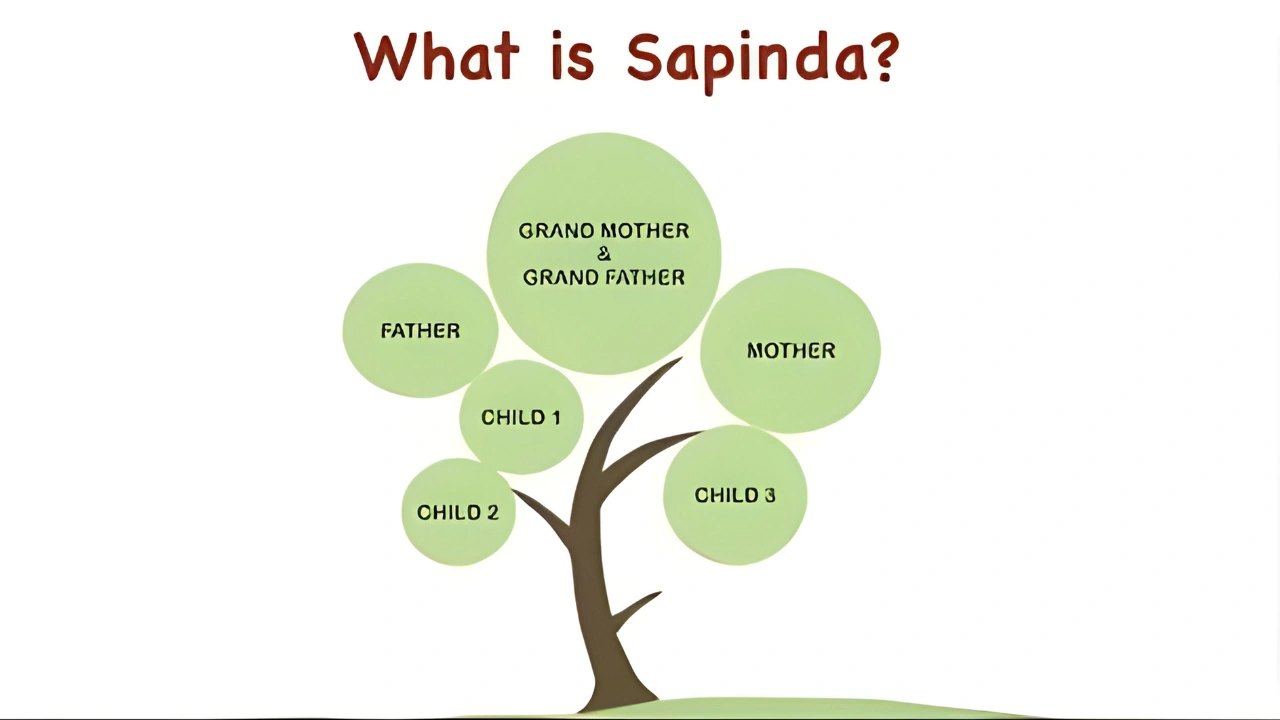
Let’s start with the foundation. Sapinda relationship means a blood connection through common ancestry that carries legal and spiritual significance in Hindu traditions. The term comes from Sanskrit—”sa” meaning “with” and “pinda” referring to offerings made to ancestors.
In Hindu law, a sapinda relationship in family law defines which relatives are considered too closely related for marriage. This isn’t about creating barriers—it’s about protecting family health, honoring lineage, and maintaining social harmony.
According to the Hindu Marriage Act, 1955, two individuals are considered sapindas of each other if one is a lineal ascendant of the other within the limits of sapinda relationship, or if they have a common lineal ascendant who is within these limits.
The Spiritual Wisdom Behind It
Think of sapinda relationship as your family’s sacred circle. Just as we wouldn’t want close siblings to marry, Hindu tradition extends this protective boundary to include several generations. It’s rooted in both spiritual reverence for ancestors and practical wisdom about genetic health.
Disclaimer: This post is for informational purposes only and should not be considered legal advice. For personalized guidance on marriage eligibility and family law matters, please consult a licensed family law attorney familiar with Hindu Marriage Act provisions.
Sapinda Relationship in Hindu Law: The Legal Framework
The sapinda relationship in Hindu marriage act provides clear guidelines that have protected families for generations. Understanding these rules helps couples navigate marriage decisions with confidence.
The Generational Limits
According to sapinda relationship section 3(f) of the Hindu Marriage Act, the limits extend:
Through the mother’s side: Up to three generations (excluding yourself)
- You, your mother, your maternal grandmother, your maternal great-grandmother
Through the father’s side: Up to five generations (excluding yourself)
- You, your father, your paternal grandfather, your paternal great-grandfather, and so on
This creates a protective boundary that honors both maternal and paternal lineages differently, reflecting traditional Hindu family structures.
Why Different Limits for Each Side?
The asymmetry reflects historical family patterns in Hindu society. Traditionally, the father’s lineage carried greater emphasis in terms of property, rituals, and family identity. The mother’s lineage, while deeply respected, had a shorter prohibition period.
Sapinda Relationship Examples: Making It Real
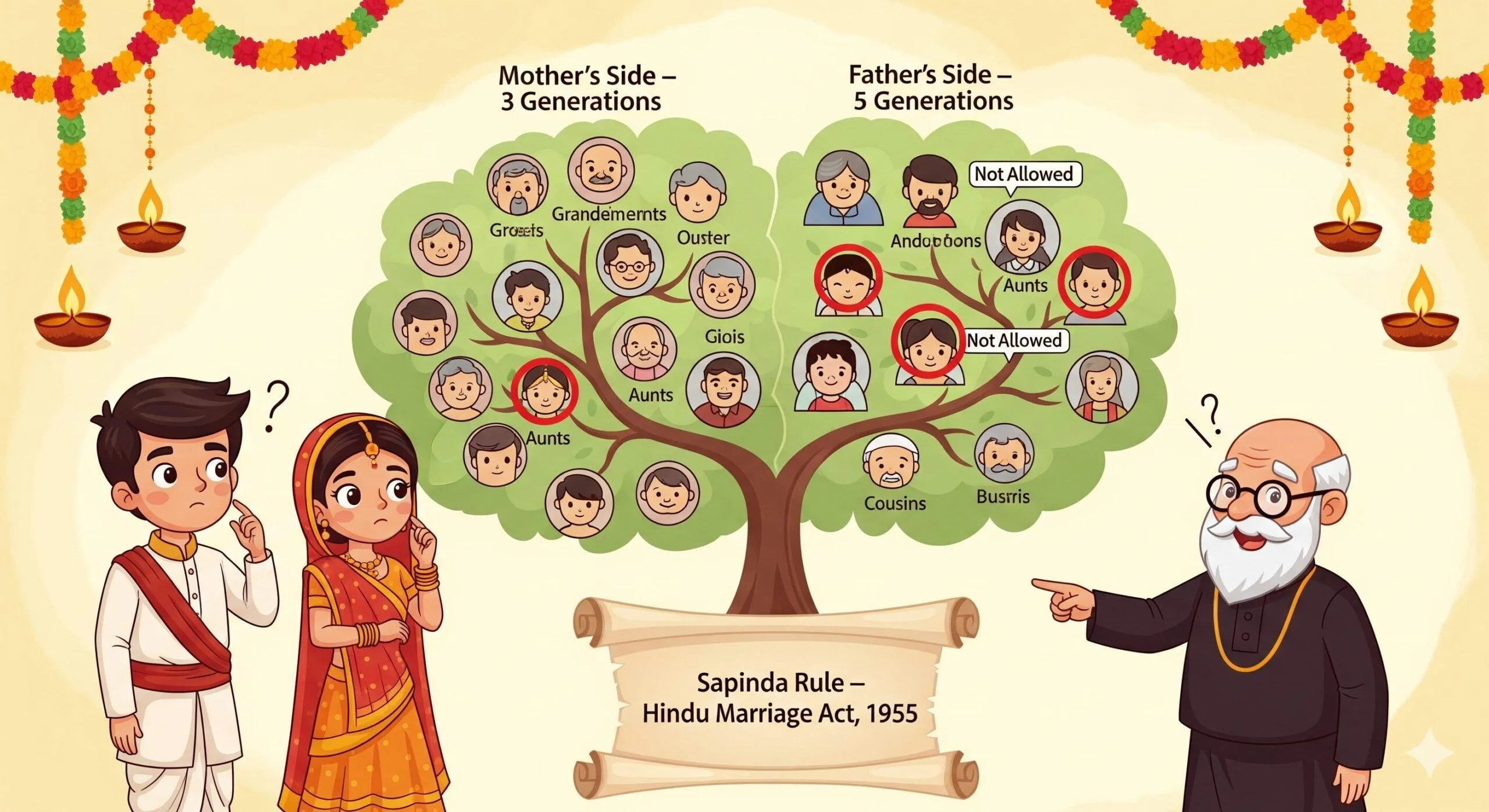
Abstract concepts become clear through real-life scenarios. Let’s explore sapinda relationship examples that show exactly who falls within this sacred circle.
Example 1: Understanding Your Mother’s Side
Imagine you’re Priya. Your mother’s relatives within sapinda relationship include:
- Your mother herself
- Your maternal grandmother (mother’s mother)
- Your maternal great-grandmother (mother’s mother’s mother)
- Your mother’s siblings (your maternal aunts and uncles)
- Your maternal grandmother’s siblings
Marriage with any of these individuals or their direct descendants up to three generations would be considered within sapinda relationship.
Example 2: Understanding Your Father’s Side
Now let’s map your father’s lineage:
- Your father
- Your paternal grandfather
- Your paternal great-grandfather
- Your paternal great-great-grandfather
- Your paternal great-great-great-grandfather
- All their children and descendants up to five generations
This extended boundary on the paternal side creates a larger protective circle around your father’s family tree.
Example 3: Cousins and Marriage
Many couples wonder about cousin marriages. Here’s the clarity you need:
First cousins (your parent’s sibling’s children) typically fall within sapinda relationship and are prohibited from marriage under Hindu law. However, cross-cousin marriages (like mother’s brother’s daughter) have exceptions in some communities, particularly in South India, where customary practices differ.
The Hindu Marriage Act allows for custom to override these prohibitions if the practice has been continuously and uniformly observed in a specific community.
Also Read: Covenant Marriage
Sapinda Relationship and Prohibited Relationship: Understanding the Difference
While often used interchangeably, sapinda relationship and prohibited relationship have distinct meanings in Hindu family law.
Sapinda Relationship
This refers specifically to blood relations through common ancestry within the prescribed generational limits. It’s based on lineage and descent.
Prohibited Relationship
This is broader and includes relationships that are prohibited due to marriage connections (affinity) rather than just blood. For instance:
- A man cannot marry his wife’s sister during his wife’s lifetime
- A woman cannot marry her husband’s brother during her husband’s lifetime
- Step-relationships that create family bonds through marriage
Think of sapinda as your blood family circle, while prohibited relationship includes the extended family created through marriages.
Sapinda Relationship Meaning in Hindi: Cultural Context
For those seeking sapinda relationship meaning in hindi, the term translates to “सपिण्ड संबंध” (Sapinda Sambandh).
The cultural understanding goes beyond legal definitions. In Hindi-speaking communities, sapinda represents:
“पिंड” (Pinda) – The ancestral offerings “स” (Sa) – Together or with
It signifies those who share the sacred duty of offering pinda (rice balls) to common ancestors during shraddha ceremonies. This shared spiritual responsibility creates a bond that’s considered too close for marriage.
When families discuss marriage proposals, elders often reference “sapinda sambandh” to guide younger generations away from matches that might violate these sacred boundaries.
Common Questions Families Ask
“Isn’t This Tradition Outdated?”
Many modern couples wonder if sapinda rules still matter. The answer is both yes and no.
Legally, these provisions remain active in Hindu law. Practically, they serve important purposes:
✨ Genetic Health: Avoiding close consanguineous marriages reduces risks of genetic disorders ✨ Social Harmony: Maintaining clear family boundaries prevents complex relationship dynamics ✨ Cultural Identity: Honoring traditions that connect us to our heritage
That said, the law also respects community customs. If your specific community has longstanding practices that differ, custom can prevail.
“What If We’re Already in Love?”
Finding yourself in love with someone within sapinda relationship creates real emotional complexity. Here’s what you should know:
First, verify whether the relationship actually falls within prohibited limits. Sometimes families misunderstand the exact boundaries.
Second, check if your community has established customs allowing such marriages. Many South Indian communities, for example, have different practices.
Third, under Section 5(v) of the Hindu Marriage Act, the parties can approach the court for special permission if there’s customary allowance in their community.
Remember: Legal barriers exist for important reasons, but they’re not absolute. Seek proper legal counsel and have honest family conversations.
How Sapinda Rules Protect Modern Families
Beyond tradition, there’s practical wisdom in understanding sapinda relationship.
Genetic Considerations
Medical science confirms that marriages between close blood relatives increase the risk of recessive genetic disorders appearing in children. The sapinda framework, created thousands of years ago, intuitively protected against these risks.
Family Dynamics
Imagine the complications if siblings married each other’s children, or if multiple generations intermarried within a small family circle. The emotional and social tangles would be overwhelming.
Sapinda rules maintain healthy boundaries that let family relationships remain clear, supportive, and drama-free.
Building Stronger Communities
By encouraging marriages outside the immediate family circle, sapinda traditions have historically promoted:
- Broader social networks
- Alliance-building between families
- Cultural exchange and diversity
- Stronger community bonds
Navigating Sapinda Relationship in Your Marriage Journey
Planning to get married? Here’s how to navigate sapinda considerations with love and wisdom.
Step 1: Create Your Family Tree
Before finalizing any match, map out both family trees going back at least five generations on the groom’s side and three on the bride’s side. This visual representation makes relationships crystal clear.
Step 2: Consult Family Elders
Elders often hold institutional knowledge about family connections that might not be immediately obvious. Their guidance can prevent complications later.
Step 3: Verify Legal Requirements
If there’s any question about sapinda relationship, consult with a lawyer familiar with Hindu family law. This small step provides huge peace of mind.
Step 4: Honor Custom Where It Exists
If your community has specific customs around cousin marriages or other relationships, ensure you understand and document these practices properly.
Real Stories: When Families Navigate Sapinda Rules
Anjali and Rahul’s Story
Anjali and Rahul met during college and fell deeply in love. When they shared the news with their families, Anjali’s grandmother raised concerns—she remembered that Rahul’s paternal great-grandfather and Anjali’s maternal great-grandmother were siblings.
Initially heartbroken, the couple consulted a family lawyer who helped them understand that this connection fell outside the prohibited sapinda limits. While they were related, the connection was distant enough to allow marriage under Hindu law.
Their families celebrated the wedding, grateful for both the traditional wisdom that protected family health and the clarity that allowed true love to flourish.
Bringing It All Together: Honoring Tradition While Building Your Future
Understanding sapinda relationship isn’t about limiting love—it’s about honoring the wisdom that has protected families for millennia while making informed choices for your future.
Whether you’re navigating marriage decisions, helping younger family members understand their heritage, or simply curious about Hindu family traditions, this knowledge empowers you to:
💕 Make relationship decisions with clarity and confidence
💕 Honor your ancestors while building your own family story
💕 Protect future generations through informed choices
💕 Navigate family discussions with wisdom and grace
Remember: You’re not just following rules—you’re participating in a beautiful tradition that sees family as sacred, that values both individual happiness and collective wellbeing, and that creates space for love to flourish within healthy boundaries.
Your Next Steps
Have questions about your specific family situation? Consider consulting with a family law expert who can provide personalized guidance based on your circumstances and community customs.
Have you navigated sapinda relationship questions in your own family? Share your experience in the comments below—your story might provide exactly the clarity another couple needs.
? Frequently Asked Questions
Can sapinda relationship rules be waived?
The Hindu Marriage Act allows customs of specific communities to override general sapinda prohibitions. If your community has a continuous and uniform practice allowing certain relationships, that custom holds legal validity. However, you cannot simply decide to waive these rules individually—the custom must be established community practice.
Do sapinda rules apply to all Hindus?
Yes, sapinda relationship provisions in the Hindu Marriage Act apply to all Hindus, Buddhists, Jains, and Sikhs in India. However, as mentioned, specific community customs can create exceptions where they exist as longstanding practice.
What happens if someone marries within sapinda relationship?
A marriage within prohibited sapinda relationship can be declared void under Section 11 of the Hindu Marriage Act. This means the marriage is treated as if it never existed legally, affecting inheritance, legitimacy of children, and other rights. However, children born from such marriages are considered legitimate.
Are adopted children subject to sapinda rules?
Yes, once legally adopted, children are considered blood relatives for sapinda relationship purposes. This means adopted siblings cannot marry each other, and the adopted child’s sapinda relationship extends through both adoptive parents’ lineages just as it would for biological children.
How do I calculate sapinda relationship correctly?
Count generations excluding yourself. For your mother’s side, count up to three generations (your mother, her mother, her mother’s mother). For your father’s side, count up to five generations upward. Anyone within these limits, and their direct descendants, falls within sapinda relationship. When in doubt, consult a family law expert.