
Ever felt like you’re texting your partner for the third time today and suddenly wondered, “Am I being too much?” You’re not alone. The clingy meaning in relationship scenarios is something almost every couple navigates at some point—whether you’re the one craving more connection or feeling suffocated by constant check-ins.
Here’s the thing: wanting closeness isn’t a character flaw. But when that need for reassurance starts creating tension instead of connection, it’s worth taking a closer look. The line between healthy attachment and clinginess can feel incredibly thin, and most of us have crossed it without even realizing. Understanding the clingy meaning in relationship context helps you see these patterns clearly rather than getting lost in guilt or resentment.
The clingy meaning in relationship dynamics goes deeper than just “texting too much” or “needing space.” It’s about recognizing when anxiety drives your behavior and learning to build security from within rather than constantly seeking it from your partner.
In this post, we’ll explore what being clingy actually means, why it happens, and most importantly, how to build a relationship where both partners feel loved without losing themselves. You’ll learn practical strategies to create secure attachment, recognize warning signs, and communicate your needs in ways that bring you closer instead of pushing your partner away.
Last updated: October 3, 2025
Disclaimer: This post is for informational purposes only. For personalized advice, please consult a licensed therapist or counselor. If you’re experiencing abuse or controlling behavior in your relationship, please reach out to a domestic violence hotline or professional support service.
What Does Clingy Mean in a Relationship?

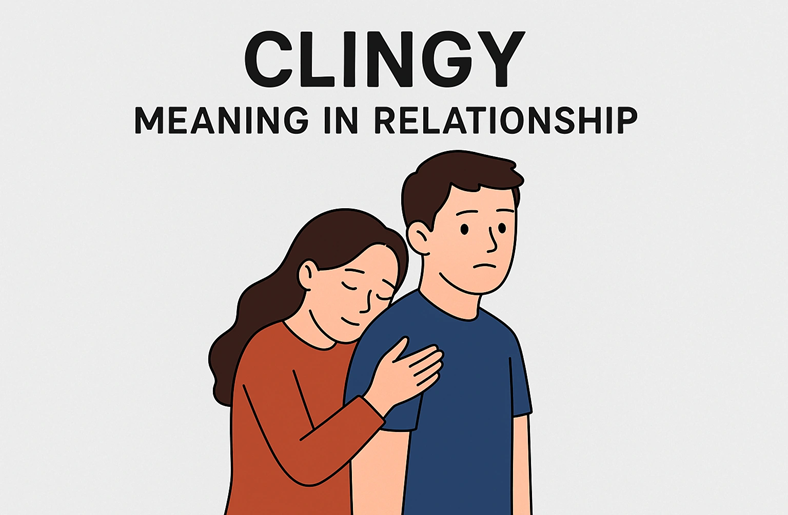
The clingy meaning in relationship terms refers to behavior where one partner seeks excessive reassurance, attention, or physical closeness to the point where it feels overwhelming to the other person. It’s not about wanting to spend time together—that’s healthy. It’s about the intensity and frequency of needing validation or presence.
A clingy person meaning often revolves around someone who:
- Needs constant communication throughout the day
- Feels anxious when their partner doesn’t respond immediately
- Struggles with their partner having separate hobbies or friendships
- Requires frequent reassurance about the relationship’s stability
- Has difficulty being alone or enjoying independent activities
Here’s what makes this tricky: what feels clingy to one person might feel normal to another. Your childhood friend might text her boyfriend every hour and he loves it. Meanwhile, your partner might feel smothered by three texts in a day. Context matters, and so does compatibility.
The Difference Between Affection and Clinginess
Healthy affection looks like: “I miss you and can’t wait to see you tonight.”
Clinginess sounds like: “Why haven’t you texted me back? Are you mad at me? Did I do something wrong?”
The key difference? Anxiety. Clingy behavior is driven by fear—fear of abandonment, fear of not being enough, fear of losing the relationship. Healthy affection comes from a place of security and genuine desire to connect.
Why Do People Become Clingy in Relationships?

Understanding the root causes helps replace judgment with compassion—both for yourself and your partner.
Attachment Styles Shape Our Behavior
Psychologists have identified that early childhood experiences create attachment patterns we carry into adult relationships. People with anxious attachment styles often exhibit what others might label as clingy behavior. According to attachment theory, if caregivers were inconsistent or emotionally unavailable during childhood, you might have learned that love requires constant effort to maintain.
This isn’t an excuse—it’s an explanation. And more importantly, it’s something you can work on.
Past Relationship Trauma
If you’ve been cheated on, ghosted, or suddenly abandoned, your nervous system remembers. That trauma can make you hypervigilant in new relationships, constantly scanning for signs that it might happen again. What looks like clinginess is often just your brain trying to protect you from being hurt again.
Low Self-Worth and External Validation
When you don’t feel inherently worthy of love, you might seek constant proof from your partner. Each text, compliment, or gesture becomes evidence that you’re lovable. The problem? External validation is like junk food—it feels good momentarily but never truly satisfies the deeper hunger.
Life Stress and Insecurity
Sometimes clingy behavior spikes during stressful periods. Maybe you just started a new job, moved to a new city, or lost someone important. Your partner becomes your safe harbor, and you unconsciously cling tighter when other areas of life feel uncertain.
Signs Your Behavior Might Be Crossing Into Clingy Territory
Self-awareness is the first step toward change. Ask yourself honestly:
Communication patterns:
- Do you panic when your partner doesn’t respond within minutes?
- Do you send multiple messages before getting a reply?
- Do you get upset when they’re busy with work or friends?
Emotional regulation:
- Does your mood depend entirely on how much attention your partner gives you?
- Do you feel anxious or empty when you’re apart?
- Do you interpret normal independence as rejection?
Boundaries and space:
- Do you feel threatened by your partner’s other relationships?
- Do you want to be included in every aspect of their life?
- Do you struggle to enjoy activities without them?
If you’re nodding along to several of these, you’re not broken—you’re just working with patterns that aren’t serving your relationship. And that’s something you can absolutely change.
The Impact of Clingy Behavior on Relationships

Let’s talk about what happens when the clingy meaning in relationship dynamics goes unaddressed.
It Creates the Opposite of What You Want
Here’s the painful irony: when you cling tighter out of fear of losing someone, you often push them away. Your partner might start feeling:
- Suffocated and trapped
- Responsible for your emotional well-being
- Guilty for needing space
- Resentful of the constant demands
The Pursuer-Distancer Dynamic
This is a common pattern: the more one person pursues (calls, texts, seeks reassurance), the more the other person distances themselves (needs space, withdraws, becomes less responsive). It’s not because they don’t care—it’s because they’re overwhelmed. And then the pursuer feels even more anxious, pursues harder, and the cycle intensifies.
I’ve watched this happen with a couple I know. Sarah would text her boyfriend constantly, and when he didn’t respond quickly, she’d call. He started leaving his phone in another room just to get a break, which made her more anxious. Neither was wrong—they were just stuck in a painful dance neither knew how to stop.
Loss of Individual Identity
When your entire world revolves around your partner, you lose touch with who you are outside the relationship. Your hobbies fade, friendships weaken, and your sense of self becomes entirely dependent on your partner’s presence and approval. That’s not love—that’s losing yourself.
Understanding the “Clingy Boyfriend” Stereotype

While we often hear about clingy girlfriends, the clingy boyfriend experience is just as common—it just gets talked about differently.
What Clingy Behavior Looks Like in Men
A clingy boyfriend might:
- Want to spend every free moment together
- Get jealous of time spent with friends or family
- Need constant updates about where you are
- Make you feel guilty for having independent interests
- Become moody or withdrawn when you’re unavailable
Why It’s Often Misunderstood
Society expects men to be emotionally independent, so when a man shows clingy behavior, it can feel confusing or be dismissed as “just being in love.” But the same patterns apply regardless of gender—it’s about insecurity seeking constant reassurance.
One relationship therapist I spoke with mentioned that men often express clinginess through control rather than obvious neediness. Instead of saying “I need you,” it might come out as “Where are you?” or “Who are you with?”—which is still the same fear underneath, just wearing different clothes.
How to Address Clingy Behavior: For the Clingy Partner
If you’ve recognized yourself in this article, take a breath. Awareness is brave, and change is absolutely possible.
Build a Stronger Relationship with Yourself
This is the foundation of everything else. When you’re secure in yourself, you don’t need constant external validation.
Try this:
- Start a hobby that’s completely yours—pottery, running, writing, anything that lights you up
- Practice being alone without filling the silence with your phone
- Journal about what you love about yourself (not what your partner loves about you)
- Challenge negative self-talk with evidence of your worth
Understand Your Triggers
When does the clingy feeling spike? Is it when your partner is out with friends? When they seem distracted? When you’re having a bad day at work?
Keep a simple log for a week. Notice the pattern. Once you know your triggers, you can prepare healthier responses instead of reacting from panic.
Communicate Your Needs Without Demanding
There’s a huge difference between:
❌ “You never text me enough. You don’t care about me.”
✅ “I’ve noticed I feel anxious when we don’t connect during the day. Would you be open to a quick check-in text around lunch? I want to work on my anxiety, and this would help while I’m building those skills.”
The second approach takes ownership of your feelings, makes a specific request, and acknowledges you’re working on yourself.
Create a Self-Soothing Toolkit
When anxiety hits and you want to text your partner for the fifth time, try these instead:
- Call a friend or family member
- Take a 10-minute walk
- Do 10 deep breaths (4 counts in, 6 counts out)
- Write your feelings in a note app instead of sending them
- Ask yourself: “What do I need right now that isn’t my partner?”
Sometimes just waiting 20 minutes before reaching out helps you realize you didn’t actually need to.
Consider Professional Support
Working with a therapist—especially one trained in attachment-based therapy—can transform these patterns. They can help you understand where your clinginess comes from and build healthier ways of relating. It’s not about fixing what’s broken; it’s about learning new skills.
How to Address Clingy Behavior: For Partners of Clingy People
If your partner’s behavior is feeling overwhelming, you’re not selfish for needing space. Healthy relationships require two whole people, not two halves desperately clinging together.
Set Compassionate Boundaries
Boundaries aren’t walls—they’re the space where love can actually grow.
Try saying:
- “I love you, and I need a couple hours to recharge after work before we connect. That helps me show up better for us.”
- “I’m going to turn my phone off during this meeting. I’ll text you when I’m done—probably around 3 pm.”
- “I need one night a week with my friends. That doesn’t mean I love you less—it means I’m taking care of myself so I can be a better partner.”
Avoid Punishment-Based Responses
When you feel suffocated, it’s tempting to pull away hard—ignore texts, cancel plans, or give the cold shoulder. But this actually reinforces the anxious person’s worst fears and makes the clinginess worse.
Instead, be consistent and predictable. If you say you’ll call at 8 pm, call at 8 pm. Reliability helps anxious partners feel safer.
Encourage Independence (Gently)
“Why don’t you try that painting class you mentioned?” “I love seeing how happy you are when you spend time with your sister.” “What would make you feel fulfilled this week, just for you?”
Help your partner see that having a full life outside the relationship makes the relationship richer, not less important.
Know When It’s Too Much
If your partner’s behavior crosses into controlling territory—monitoring your phone, isolating you from friends, or making you feel guilty for normal independence—that’s not clinginess. That’s emotional manipulation, and it requires professional intervention or, in some cases, ending the relationship.
You deserve a partner who trusts you and supports your wholeness, not someone who needs you to shrink yourself to feel secure.
What’s the Difference Between “Too Clingy” and “Semi-Clingy”?
The too clingy meaning in relationship terms typically refers to behavior that consistently crosses boundaries, creates relationship tension, and stems from deep insecurity that one partner isn’t actively addressing.
The semi clingy meaning in relationship dynamics is different—it’s the normal fluctuation we all experience. Maybe you’re going through a rough time and need more closeness temporarily. Or you’re in the early honeymoon phase and just want to be together constantly. Semi-clingy is situational, temporary, and doesn’t create constant anxiety for either partner.
Think of it like this:
- Semi-clingy: “I miss you extra this week because I’m stressed about work.”
- Too clingy: “I can’t function without hearing from you every hour, and I get upset when you do things without me.”
The first is human. The second needs attention and work.
Building Secure Attachment in Your Relationship
The goal isn’t to eliminate closeness—it’s to build the kind of connection where both people feel safe, seen, and free.
Practice Emotional Regulation Together
When one person is anxious, the other often becomes defensive. Instead, try:
- “I notice you’re feeling anxious right now. What would help?”
- “I’m feeling overwhelmed. Can we take a pause and come back to this in 20 minutes?”
- Learning each other’s nervous system signals and responding with compassion
Create Rituals of Connection
Sometimes clinginess happens because there aren’t enough reliable connection points. Build in predictable time together:
- Morning coffee together before work
- A daily 15-minute check-in call
- Sunday breakfast where you both share the highs and lows of your week
- A weekly date night that’s sacred
When connection is reliable, anxiety decreases.
Celebrate Independence
Make it a positive thing when your partner pursues their own interests. “I love how passionate you are about your book club” or “You seem so energized after basketball—I love seeing you like this.”
When independence is celebrated rather than seen as a threat, both partners relax.
Work on Trust Actively
Trust isn’t just hoping your partner won’t hurt you—it’s consistently showing up for each other in small ways:
- Following through on commitments
- Being honest about feelings
- Respecting boundaries
- Apologizing when you mess up
- Showing curiosity about each other’s inner worlds
Trust is built in tiny moments, not grand gestures.
Real Stories: Finding Balance Between Closeness and Space
Maya and James: Maya noticed she was texting James constantly throughout his workday and feeling hurt when he didn’t respond immediately. After a tough conversation, they agreed on a “good morning” text, a lunch check-in, and an evening call. Having a structure helped Maya feel secure without overwhelming James. She also started therapy to work on her abandonment fears from her parents’ divorce. Six months later, she told me she felt more secure than ever—not because James was more available, but because she learned she could be okay even when he wasn’t.
Carlos and his girlfriend: Carlos realized he was getting jealous whenever his girlfriend made plans with friends. He’d guilt-trip her or create reasons why she should stay home. After she almost ended the relationship, he started working with a therapist on his insecurity. He learned that his clinginess came from his father leaving when he was young. Understanding the root helped him separate past pain from present reality. Now he encourages her friendships because he knows a happy partner makes for a happy relationship.
Read Also: Gentle Parenting Definition
When to Seek Professional Help
Consider couples therapy or individual therapy if:
- The clingy behavior isn’t improving despite honest effort
- It’s creating constant conflict or resentment
- There are underlying mental health concerns (anxiety, depression, trauma)
- One partner feels controlled or manipulated
- You’re stuck in the pursuer-distancer cycle and can’t break free
A therapist trained in Emotionally Focused Therapy (EFT) or attachment-based approaches can help you understand and rewire these patterns. According to the American Psychological Association, working with a trained professional can significantly improve relationship satisfaction and individual emotional regulation.
There’s no shame in getting support. In fact, choosing to work on your patterns is one of the most loving things you can do—for yourself and your partner.
Conclusion: Love Doesn’t Mean Losing Yourself
Understanding the clingy meaning in relationship dynamics helps you replace judgment with compassion. True intimacy requires two complete individuals choosing connection from security, not desperation. The clingy meaning in relationship context teaches us that healthy love means feeling both close and free—simultaneously nourishing your bond while honoring your individual wholeness.
FAQs About Clingy Meaning in Relationships
What does it mean when someone is clingy in a relationship?
Being clingy means needing excessive reassurance, constant communication, or continuous presence to feel secure. It’s driven by anxiety and fear of abandonment rather than healthy affection, and typically feels overwhelming to the other partner.
How do I know if I’m being too clingy with my partner?
You might be too clingy if you panic without immediate responses, feel anxious about their independent plans, need constant reassurance, or if your partner has expressed feeling overwhelmed. Your mood shouldn’t depend entirely on their attention.
Can a clingy person change their behavior?
Yes, absolutely. Clingy behavior is learned and can be unlearned through self-awareness, understanding attachment styles, building self-worth, and practicing emotional regulation. Therapy can significantly help, and many people successfully develop more secure attachment patterns.
Is being a little clingy normal in the beginning of a relationship?
Yes, some clinginess during the honeymoon phase is normal when you want to spend lots of time together. It becomes problematic only if it continues long-term, crosses boundaries, or creates anxiety for either partner.
How should I handle a clingy boyfriend without hurting his feelings?
Use compassionate communication focused on your needs: “I need time for hobbies to feel balanced.” Set clear, consistent boundaries, encourage his independence, and suggest exploring the root causes with a therapist if he’s open to it.